Caring for a horse is a meaningful commitment that combines responsibility, consistency, and compassion. For beginners, understanding the basics of horse care ensures a healthy, comfortable, and trusting relationship between owner and horse. Below are the essential guidelines every new horse owner should know.
Understanding a Horse’s Basic Needs
Before diving into daily routines, it’s important to understand a horse’s core needs: shelter, food, water, safety, and companionship.
A clean and well-maintained stable or run-in shelter protects the horse from extreme weather. Pastures should be checked regularly for hazards, broken fences, or toxic plants. Horses also require unlimited access to fresh water and a salt or mineral block to maintain proper hydration and electrolyte balance. Since horses are herd animals, regular social interaction—either with other horses or a compatible stable mate—supports their emotional well-being.
Proper Nutrition
A healthy diet is fundamental to horse care. Forage, such as good-quality hay or pasture grass, should form the majority of the horse’s diet. Concentrates like grains or pellets may be added as needed, depending on the horse’s age, workload, and body condition.
A consistent feeding schedule is essential, as horses thrive on routine. Feeding smaller portions several times a day supports healthy digestion. Treats like apples or carrots can be given occasionally, but always in moderation to avoid dietary imbalance.
Grooming and Hygiene
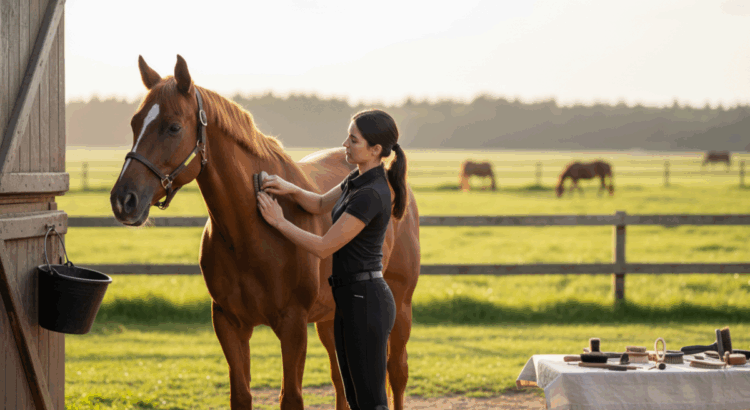
Regular grooming keeps the horse clean, increases comfort, and allows early detection of injuries, skin conditions, or weight changes.
A beginner should equip themselves with essential grooming tools such as a curry comb, soft brush, hoof pick, and mane/tail comb. A typical grooming routine includes loosening dirt with a curry comb, brushing the coat smooth, and cleaning the hooves to remove stones, debris, and mud. Seasonal changes will affect grooming needs—summer heat may require rinsing after exercise, while winter grooming helps maintain coat insulation.
Hoof Care
The saying “No hoof, no horse” is absolutely true. Healthy hooves are essential for overall soundness and mobility.
Hooves should be picked out daily to remove stones and prevent infections. Regular farrier visits, typically every six to eight weeks, keep the hooves properly trimmed and balanced. Maintaining clean, dry turnout areas and stables helps reduce the risk of hoof issues such as thrush or abscesses.
Healthcare and Preventive Maintenance
Daily observation is one of the most effective ways to monitor a horse’s health. A beginner should check the horse’s demeanor, appetite, breathing, coat condition, and eyes each day.
Routine veterinary care is also vital. Horses need scheduled vaccinations, deworming plans, and dental care. Every horse owner should maintain a well-stocked first-aid kit containing essentials such as bandages, antiseptic solution, a thermometer, and wound supplies. It’s also wise to have an emergency plan for common issues like colic or injuries.
Exercise and Mental Stimulation
Horses require both physical activity and mental engagement. A structured exercise routine promotes muscle tone, joint mobility, and cardiovascular health. Activities may include riding, lunging, groundwork, or turnout time in a safe pasture.
Groundwork exercises not only stimulate the horse mentally but also help strengthen the bond between horse and owner. Social interaction with other horses is another beneficial enrichment method that supports emotional balance.
Safety, Tack, and Rider Preparedness
Beginner horse owners must prioritize safety for both themselves and their horse.
Choosing the right tack—such as a properly fitted saddle, bridle, and halter—prevents discomfort and injury. Basic stable equipment, including a pitchfork, wheelbarrow, and grooming supplies, should always be available. For riding, wearing a certified helmet, safe footwear, and appropriate clothing significantly reduces the risk of accidents. Working with a knowledgeable trainer provides invaluable guidance and builds confidence.
Starting the journey of horse ownership is exciting, but it also comes with responsibilities that require dedication and continuous learning. By focusing on essential care routines—nutrition, grooming, exercise, health maintenance, and safety—beginners can create a strong foundation for a long-lasting and positive partnership with their horse.For horse owners seeking balance beyond daily responsibilities, a helpful next step is exploring “Finding Balance: How Horse Owners Can Unwind and Recharge After a Busy Week at the Stables”, which offers practical tips for restoring energy and maintaining well-being.